A dolphinfish in the family Coryphaenidae, unrelated to marine mammals. California and NOAA recognize Coryphaena hippurus.
Southern California field dossier
Pacific Mahimahi
Coryphaena hippurus
- dorado
- mahi-mahi
- dolphinfish
Dorado, mahi-mahi, and dolphinfish are names for the same fast-growing offshore predator. Read the long dorsal fin, deeply forked tail, tall forehead, and electric blue-green-gold color together.
Sources reviewed 2026-07-287 source records
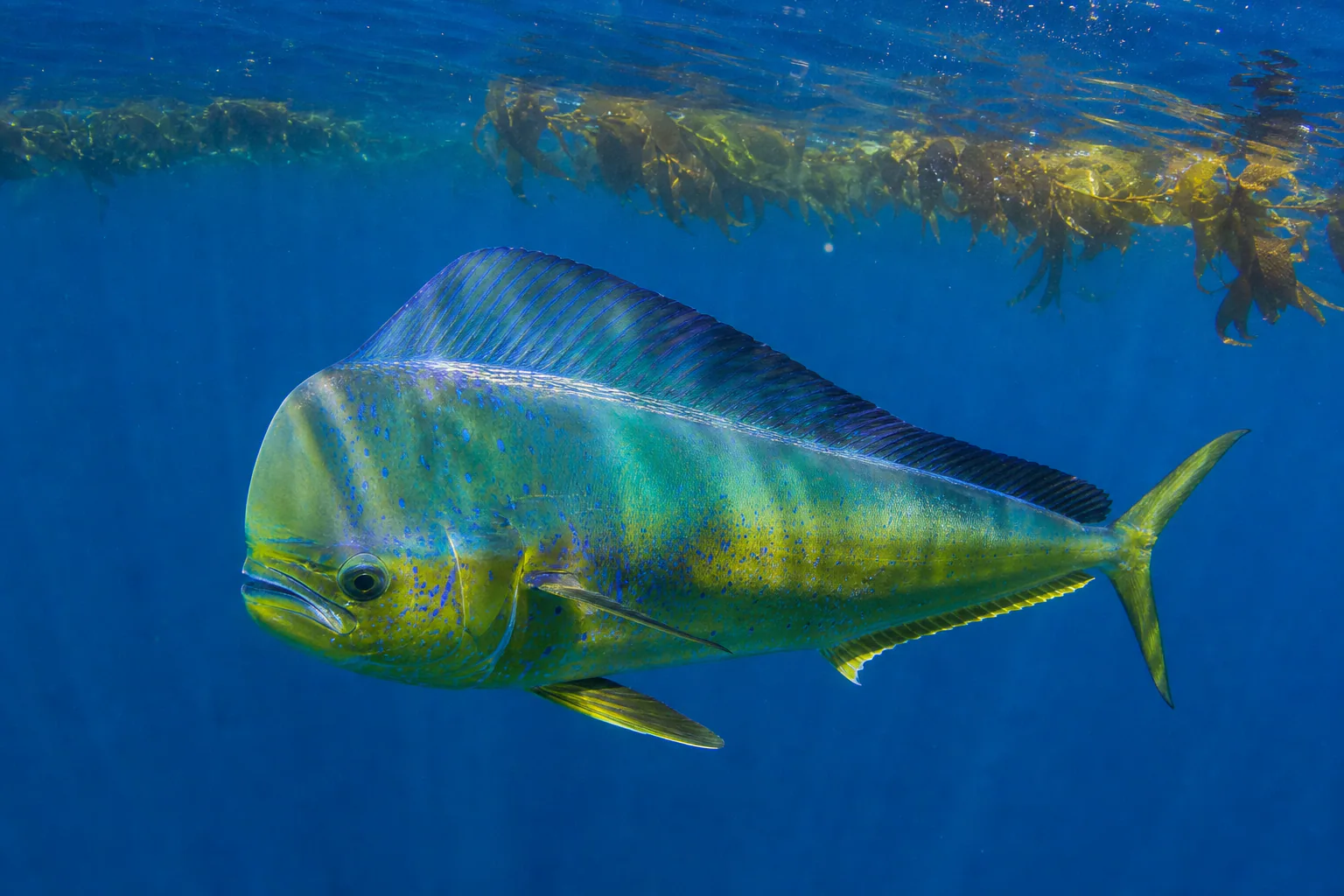
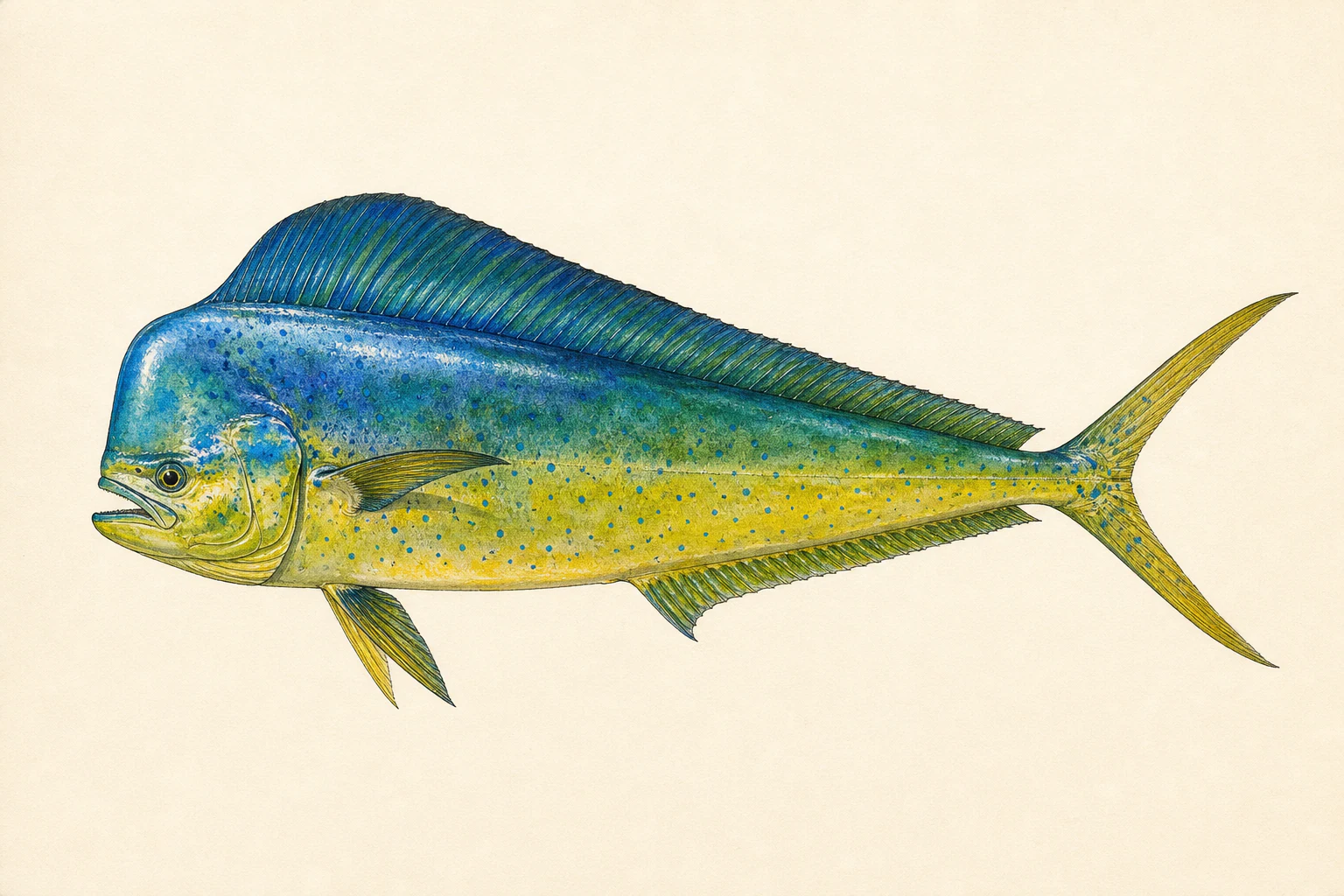
- Long continuous dorsalThe dorsal fin begins near the head and runs nearly the entire length of the back.
- Blue-green-gold bodyLive fish show iridescent blue and green above with golden sides and scattered spots.
- Tall head and forked tailA blunt forehead—especially in males—and a deeply forked tail create the unmistakable silhouette.
Verify current regulations before every tripSnapshot checked 2026-07-28. Follow the official links below for live rules, protected areas, licenses, and any in-season changes.
At a glance
Every factual card carries provenance
Warm open-ocean surface waters, frequently near floating objects, weed lines, current edges, and concentrated forage.
An active predator of small pelagic fishes, squid, and crustaceans near the surface.
Verify current California pelagic finfish bag, possession, fillet, and jurisdiction rules before keeping dorado, especially on cross-border trips.
Field dossier
Beginner-readable, source-deep
Read multiple features
Identification & look-alikes
The dorsal fin begins near the head and runs nearly the entire length of the back. Live fish show iridescent blue and green above with golden sides and scattered spots. A blunt forehead—especially in males—and a deeply forked tail create the unmistakable silhouette.
Use body shape, fin placement, color pattern, and the official California identification resources together. Never make a keep decision from one color mark or a count-category name alone.
Scale changes the silhouette
Size & growth
A rapidly growing pelagic fish. Mature males can develop a tall, nearly vertical forehead while females retain a more rounded head profile.
Match the forage class
Diet
An active predator of small pelagic fishes, squid, and crustaceans near the surface.
How the fish uses the water
Behavior
Fast, highly mobile, and often associated with floating habitat or visible surface activity. Brilliant color fades quickly after capture.
Start with structure and water column
Habitat & depth
Warm open-ocean surface waters, frequently near floating objects, weed lines, current edges, and concentrated forage.
Availability is not a promise
Southern California seasonality
Southern California appearances depend strongly on warm offshore water and current conditions; recent landings are more useful than a fixed calendar promise.
A source-backed starting point
Techniques & tackle
Trolling, casting to visible fish or floating structure, and live-bait presentations are common offshore approaches.
Decide before the fish reaches the rail
Handling & release
Use tackle strong enough to land the fish without an exhausting fight, and keep a dehooker or suitable release tool ready.
If releasing, dehook in the water when possible. Never gaff a fish you plan to release, keep air exposure brief, wet your hands, avoid eyes and gills, and support the body rather than hanging the fish by its mouth.
Face a sluggish fish into the current until it can swim away under its own power.
Snapshot checked 2026-07-28
California regulations
Verify current California pelagic finfish bag, possession, fillet, and jurisdiction rules before keeping dorado, especially on cross-border trips.
Verify current California pelagic finfish bag, possession, fillet, and jurisdiction rules before keeping dorado, especially on cross-border trips.
Review the general ocean regulations for possession, filleting, gear, protected-area, and boat-limit rules before departure.
From species to a trip plan
No inferred targeting
Recent verified countsOpen the live count view. Missing source reports remain labeled, never converted to zero.
Live source states →Open tripsBrowse verified schedule inventory. Current beta inventory does not claim that a trip targets this species.
Targeting not yet verified →Landing sourcesInspect official count and schedule sources by Southern California landing.
Source directory →Boats reporting tripsSee boats present in verified schedule feeds. Species targeting is shown only when a source proves it.
Honest coverage →Citation & provenance ledger
7 sources used in this dossier
- Pacific Mahimahi species profileNOAA FisheriesOfficial NOAA appearance, biology, range, habitat, and fishery summary. Reviewed 2026-07-28.
- California Marine Species PortalCalifornia Department of Fish and WildlifeCurrent California common names, scientific names, and species aliases. Reviewed 2026-07-28.
- Southern Region ocean regulationsCalifornia Department of Fish and WildlifeOfficial current Southern Region season, size, bag, and possession summary. The page states it was updated July 1, 2026. Reviewed 2026-07-28.
- General ocean fishing regulationsCalifornia Department of Fish and WildlifeOfficial general limits, boat limits, gear rules, and fillet requirements. The page states it was updated July 24, 2026. Reviewed 2026-07-28.
- Marine Fish and Shellfish IdentificationCalifornia Department of Fish and WildlifeOfficial California identification hub, including rockfish groups and Southern California sport-fish references. Reviewed 2026-07-28.
- Catch and release fishing best practicesNOAA FisheriesOfficial handling and release guidance. NOAA states the page was updated September 3, 2025. Reviewed 2026-07-28.
- Ocean Sport Fishing hubCalifornia Department of Fish and WildlifeOfficial entry point for licenses, identification, current regulations, marine protected areas, advisories, and release guidance. Reviewed 2026-07-28.
Continue learning
Return to the guide for another dossier, or open the normalized count profile for the same species name.