A greenling relative in the family Hexagrammidae, not a cod. California lists the species as Lingcod, Ophiodon elongatus.
Southern California field dossier
Lingcod
Ophiodon elongatus
- ling
- buckethead
A large-mouthed North Pacific reef predator with an elongated mottled body, sharp canine teeth, and one long dorsal profile split into spiny and soft-rayed sections.
Sources reviewed 2026-07-288 source records
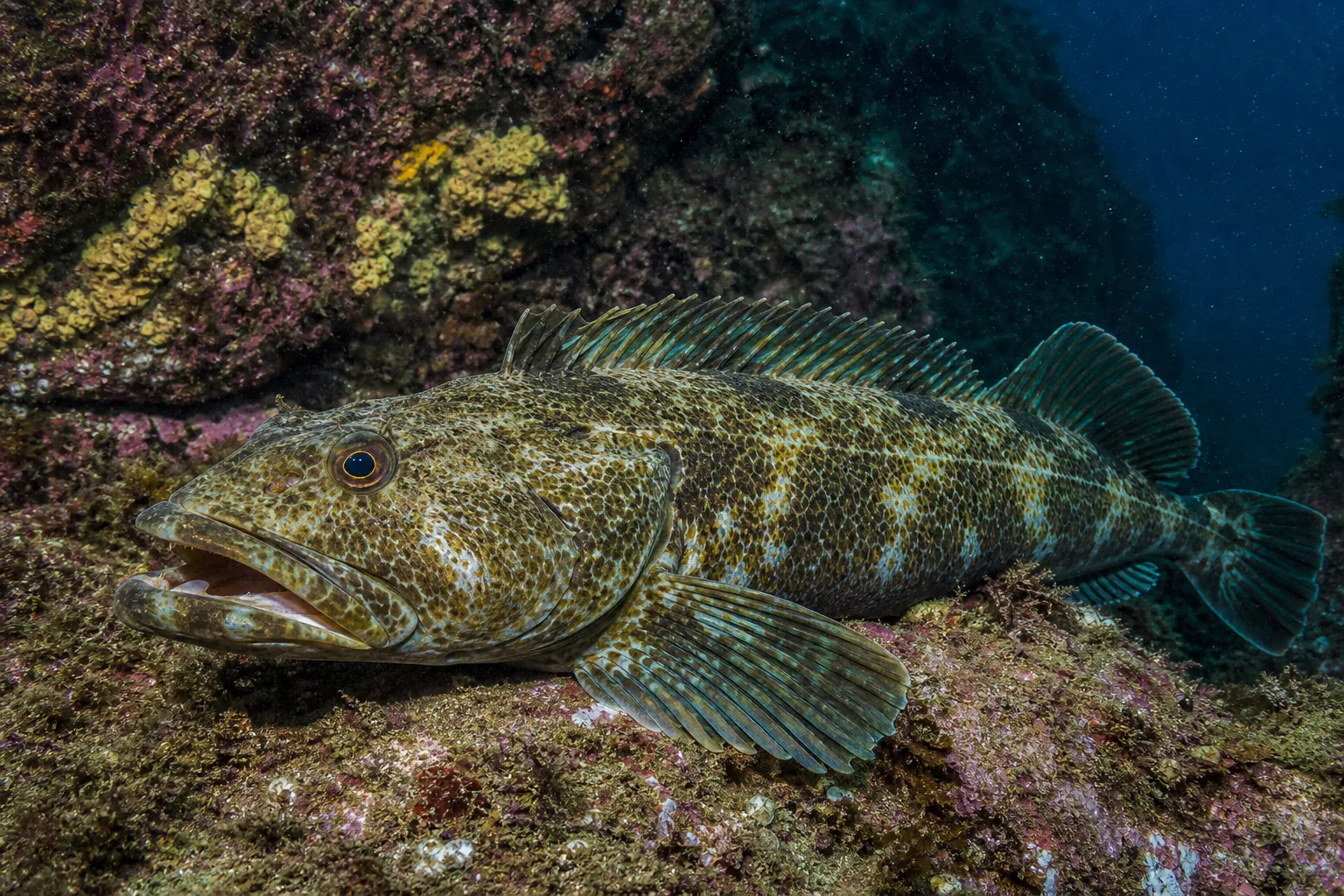
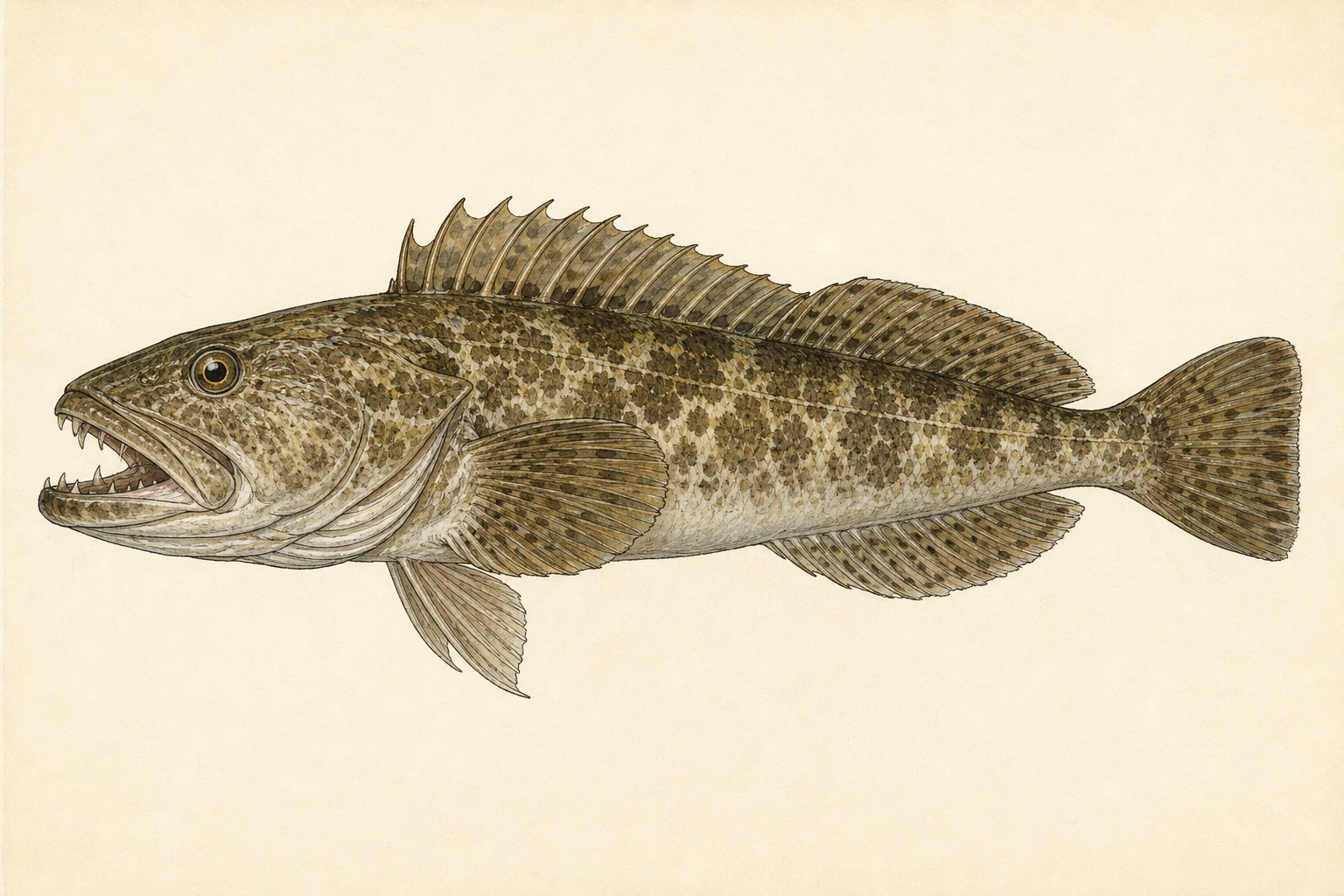
- Huge toothed mouthThe head is broad and the jaw carries obvious canine teeth.
- Long mottled bodyBrown, gray, green, or blue mottling covers an elongated body rather than the deep body of a rockfish.
- Long divided dorsalThe dorsal profile runs most of the back with a forward spiny section and rear soft-rayed section.
Verify current regulations before every tripSnapshot checked 2026-07-28. Follow the official links below for live rules, protected areas, licenses, and any in-season changes.
At a glance
Every factual card carries provenance
Rocky reefs, ledges, pinnacles, wrecks, and mixed hard-bottom habitat from shallow coastal water to deeper shelf areas.
Consumes fishes, squid, octopus, crabs, and other sizable prey, sometimes taking fish hooked by anglers.
Lingcod has species-specific minimum-size, bag, season, depth, and fillet rules within the groundfish framework. Verify all current provisions before retention.
Field dossier
Beginner-readable, source-deep
Read multiple features
Identification & look-alikes
The head is broad and the jaw carries obvious canine teeth. Brown, gray, green, or blue mottling covers an elongated body rather than the deep body of a rockfish. The dorsal profile runs most of the back with a forward spiny section and rear soft-rayed section.
Use body shape, fin placement, color pattern, and the official California identification resources together. Never make a keep decision from one color mark or a count-category name alone.
Scale changes the silhouette
Size & growth
Match the forage class
Diet
How the fish uses the water
Behavior
Start with structure and water column
Habitat & depth
Availability is not a promise
Southern California seasonality
A source-backed starting point
Techniques & tackle
Decide before the fish reaches the rail
Handling & release
Use tackle strong enough to land the fish without an exhausting fight, and keep a dehooker or suitable release tool ready.
If releasing, dehook in the water when possible. Never gaff a fish you plan to release, keep air exposure brief, wet your hands, avoid eyes and gills, and support the body rather than hanging the fish by its mouth.
Face a sluggish fish into the current until it can swim away under its own power.
Snapshot checked 2026-07-28
California regulations
Lingcod has species-specific minimum-size, bag, season, depth, and fillet rules within the groundfish framework. Verify all current provisions before retention.
Lingcod has species-specific minimum-size, bag, season, depth, and fillet rules within the groundfish framework. Verify all current provisions before retention.
Review the general ocean regulations for possession, filleting, gear, protected-area, and boat-limit rules before departure.
From species to a trip plan
No inferred targeting
Recent verified countsOpen the live count view. Missing source reports remain labeled, never converted to zero.
Live source states →Open tripsBrowse verified schedule inventory. Current beta inventory does not claim that a trip targets this species.
Targeting not yet verified →Landing sourcesInspect official count and schedule sources by Southern California landing.
Source directory →Boats reporting tripsSee boats present in verified schedule feeds. Species targeting is shown only when a source proves it.
Honest coverage →Citation & provenance ledger
8 sources used in this dossier
- California Marine Species PortalCalifornia Department of Fish and WildlifeCurrent California common names, scientific names, and species aliases. Reviewed 2026-07-28.
- California Marine Food and Game FishesCalifornia Department of Fish and WildlifeCDFW Fish Bulletin 157 used for stable Southern California identification, distribution, habitat, and life-history context. Reviewed 2026-07-28.
- Life History Information for Selected California Marine FishesCalifornia Department of Fish and WildlifeOfficial habitat, depth, reproduction, and life-history summaries for California marine fishes. Reviewed 2026-07-28.
- Southern Region ocean regulationsCalifornia Department of Fish and WildlifeOfficial current Southern Region season, size, bag, and possession summary. The page states it was updated July 1, 2026. Reviewed 2026-07-28.
- General ocean fishing regulationsCalifornia Department of Fish and WildlifeOfficial general limits, boat limits, gear rules, and fillet requirements. The page states it was updated July 24, 2026. Reviewed 2026-07-28.
- Marine Fish and Shellfish IdentificationCalifornia Department of Fish and WildlifeOfficial California identification hub, including rockfish groups and Southern California sport-fish references. Reviewed 2026-07-28.
- Catch and release fishing best practicesNOAA FisheriesOfficial handling and release guidance. NOAA states the page was updated September 3, 2025. Reviewed 2026-07-28.
- Ocean Sport Fishing hubCalifornia Department of Fish and WildlifeOfficial entry point for licenses, identification, current regulations, marine protected areas, advisories, and release guidance. Reviewed 2026-07-28.
Continue learning
Return to the guide for another dossier, or open the normalized count profile for the same species name.