A true sea bass in the family Serranidae. California lists the species as Barred Sand Bass, Paralabrax nebulifer.
Southern California field dossier
Barred Sand Bass
Paralabrax nebulifer
- sand bass
- sandy
- rock bass
- grumpy
The live count's Sand Bass label maps here: a Southern California bass read by dark vertical bars, scattered pale blotches, a large mouth, and a notched continuous dorsal fin.
Sources reviewed 2026-07-287 source records
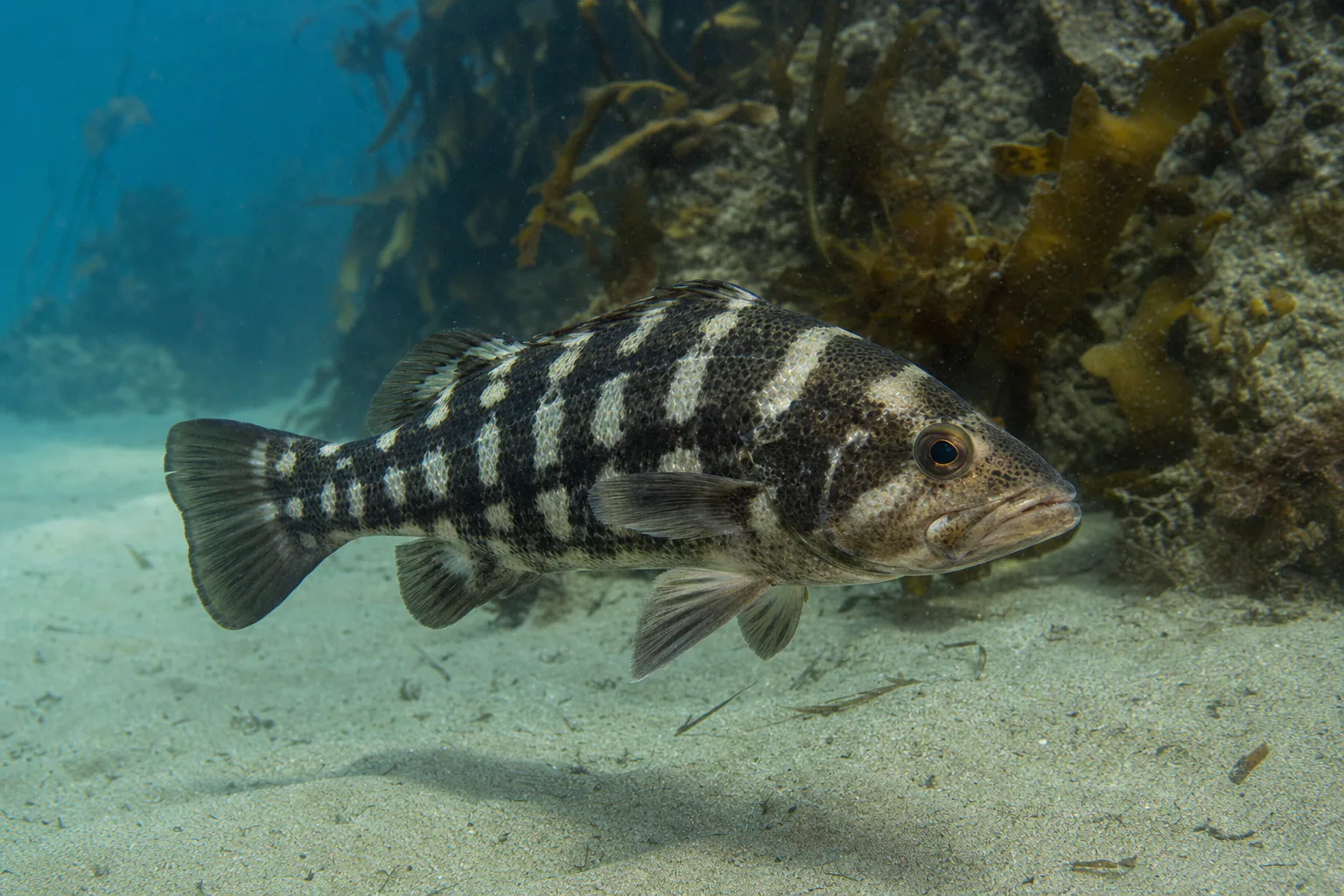
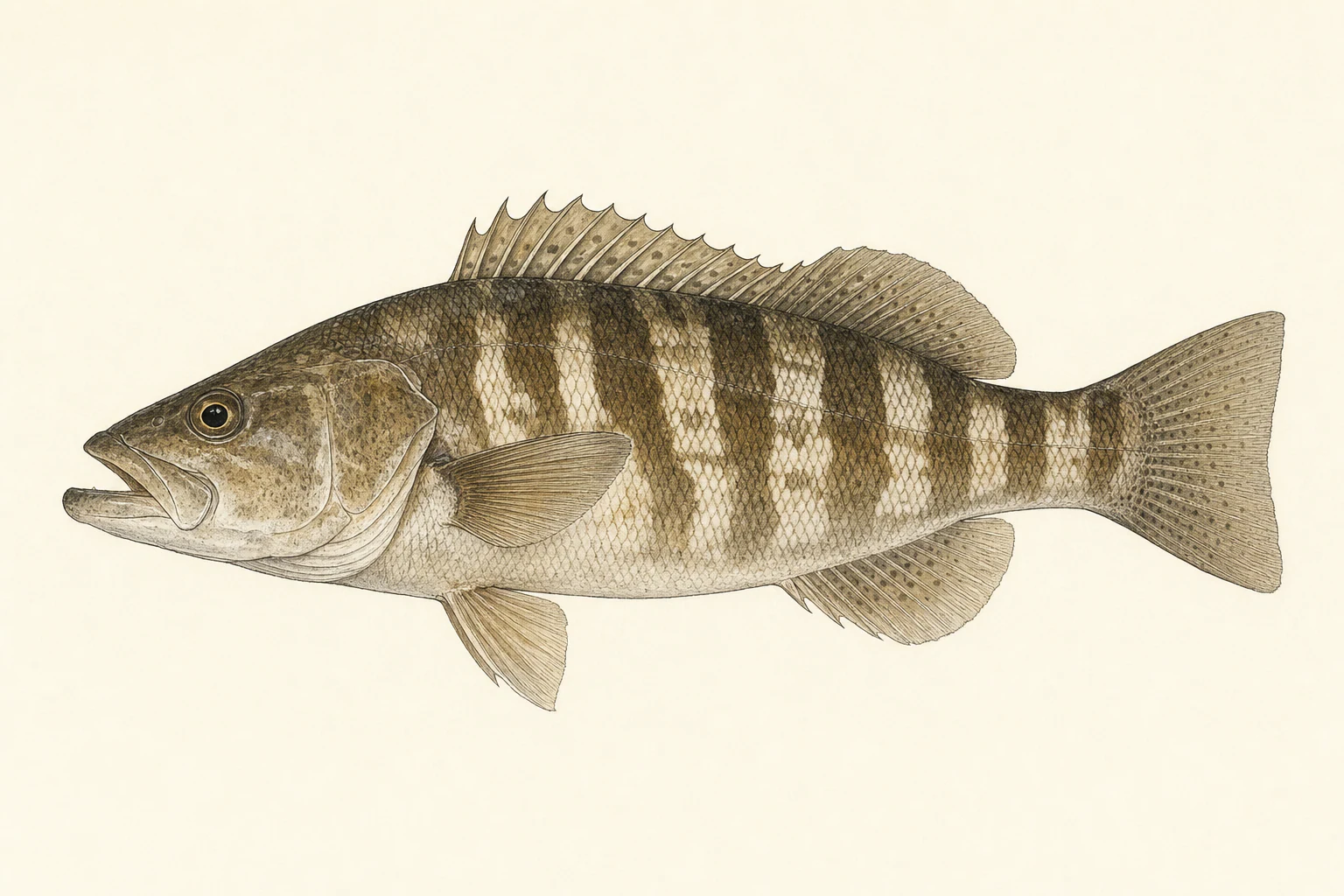
- Dark vertical barsBroad dark bars or saddle-like blotches cross the back and upper sides.
- Pale checkerboard spotsScattered pale rectangular blotches break up the brown-to-olive body pattern.
- Bass head and dorsalA large mouth and notched continuous dorsal fin separate it from croakers and many rockfishes.
Verify current regulations before every tripSnapshot checked 2026-07-28. Follow the official links below for live rules, protected areas, licenses, and any in-season changes.
At a glance
Every factual card carries provenance
Uses sandy or muddy bottom beside reefs, artificial structure, kelp edges, bays, and deeper coastal habitat in Southern California and Baja California.
Feeds on small fishes, crustaceans, and cephalopods around bottom structure and nearby open substrate.
Barred, kelp, and spotted sand bass share a bass regulation framework with species-specific size and aggregate bag rules. Verify the current Southern Region entry before keeping fish.
Field dossier
Beginner-readable, source-deep
Read multiple features
Identification & look-alikes
Broad dark bars or saddle-like blotches cross the back and upper sides. Scattered pale rectangular blotches break up the brown-to-olive body pattern. A large mouth and notched continuous dorsal fin separate it from croakers and many rockfishes.
Use body shape, fin placement, color pattern, and the official California identification resources together. Never make a keep decision from one color mark or a count-category name alone.
Scale changes the silhouette
Size & growth
Match the forage class
Diet
How the fish uses the water
Behavior
Start with structure and water column
Habitat & depth
Availability is not a promise
Southern California seasonality
A source-backed starting point
Techniques & tackle
Decide before the fish reaches the rail
Handling & release
Use tackle strong enough to land the fish without an exhausting fight, and keep a dehooker or suitable release tool ready.
If releasing, dehook in the water when possible. Never gaff a fish you plan to release, keep air exposure brief, wet your hands, avoid eyes and gills, and support the body rather than hanging the fish by its mouth.
Face a sluggish fish into the current until it can swim away under its own power.
Snapshot checked 2026-07-28
California regulations
Barred, kelp, and spotted sand bass share a bass regulation framework with species-specific size and aggregate bag rules. Verify the current Southern Region entry before keeping fish.
Barred, kelp, and spotted sand bass share a bass regulation framework with species-specific size and aggregate bag rules. Verify the current Southern Region entry before keeping fish.
Review the general ocean regulations for possession, filleting, gear, protected-area, and boat-limit rules before departure.
From species to a trip plan
No inferred targeting
Recent verified countsOpen the live count view. Missing source reports remain labeled, never converted to zero.
Live source states →Open tripsBrowse verified schedule inventory. Current beta inventory does not claim that a trip targets this species.
Targeting not yet verified →Landing sourcesInspect official count and schedule sources by Southern California landing.
Source directory →Boats reporting tripsSee boats present in verified schedule feeds. Species targeting is shown only when a source proves it.
Honest coverage →Citation & provenance ledger
7 sources used in this dossier
- California Marine Species PortalCalifornia Department of Fish and WildlifeCurrent California common names, scientific names, and species aliases. Reviewed 2026-07-28.
- California Marine Food and Game FishesCalifornia Department of Fish and WildlifeCDFW Fish Bulletin 157 used for stable Southern California identification, distribution, habitat, and life-history context. Reviewed 2026-07-28.
- Southern Region ocean regulationsCalifornia Department of Fish and WildlifeOfficial current Southern Region season, size, bag, and possession summary. The page states it was updated July 1, 2026. Reviewed 2026-07-28.
- General ocean fishing regulationsCalifornia Department of Fish and WildlifeOfficial general limits, boat limits, gear rules, and fillet requirements. The page states it was updated July 24, 2026. Reviewed 2026-07-28.
- Marine Fish and Shellfish IdentificationCalifornia Department of Fish and WildlifeOfficial California identification hub, including rockfish groups and Southern California sport-fish references. Reviewed 2026-07-28.
- Catch and release fishing best practicesNOAA FisheriesOfficial handling and release guidance. NOAA states the page was updated September 3, 2025. Reviewed 2026-07-28.
- Ocean Sport Fishing hubCalifornia Department of Fish and WildlifeOfficial entry point for licenses, identification, current regulations, marine protected areas, advisories, and release guidance. Reviewed 2026-07-28.
Continue learning
Return to the guide for another dossier, or open the normalized count profile for the same species name.